Most of the Work Happens Before the Crew Shows Up
Most homeowners expect a professional network installation to be a mess. They picture technicians in the attic for days, cables running everywhere, and someone walking room to room with a phone to hunt for dead zones. So plenty of people skip the pro and plug in a retail mesh kit instead. Only to then deal with subpar performance, including dropped calls in the home office and an unreliable signal in the kitchen.
But professional network installations, when done right, are a breeze. With good planning, most of the real work happens before installation day, and the crew arrives with equipment that is already built and tested. Keep reading to see how your whole-home network goes from the first walk-through to completion, and why it holds up better than a kit-from-a-box.
Planning Starts With Your Floor Plan
Every home behaves differently. Stone fireplaces and thick plaster walls swallow Wi-Fi signals. In a big Oklahoma home, that often means full bars in the kitchen and one bar in the home office at the far end of the hall. A retail mesh kit ships the same way to every house. Its nodes plug into outlets wherever they fit, and many of them pass the signal along over the air from one node to the next, which can slow things down with every hop.
A professionally designed network starts with a walk-through of your property. Which rooms do you use most? Where have you had signal issues in the past? Using that information, our team decides where each wireless access point should go, where hardwired connections are necessary, and then map how every cable runs back to a central switch.
What Happens in the Shop Before Install Day
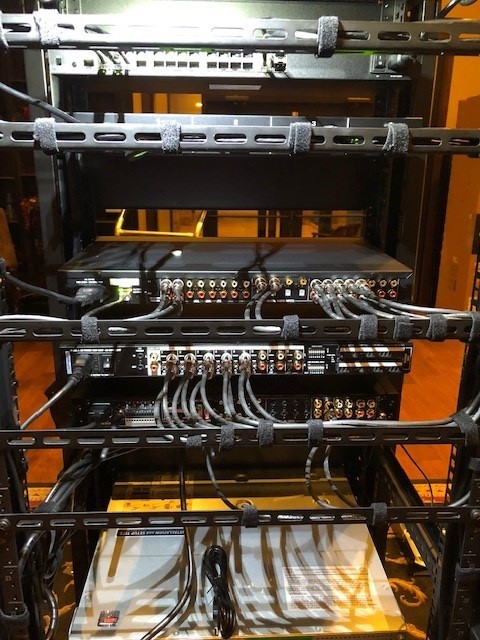
Once the plan is set, the real work begins at our shop. We configure the router and access points for your home, and build the rack with all your equipment. We test it all together to make sure it works before anything gets shipped and label every piece, so there is a clear map of where to start on future service calls.